
people are currently living with dementia in the UK.
Dementia support, not gadget theatre
A calm voice-and-photo companion for people living with early dementia.
Adoptabot Personal AI Lifemate (PAL) helps keep the day familiar: routine prompts, family photo recognition cues, one-tap calls, and gentle alerts when something important has been missed.
- Simple daily reminders
- Photo prompts for names and relationships
- Carer alerts for missed routines
- Scam warning mode for suspicious calls
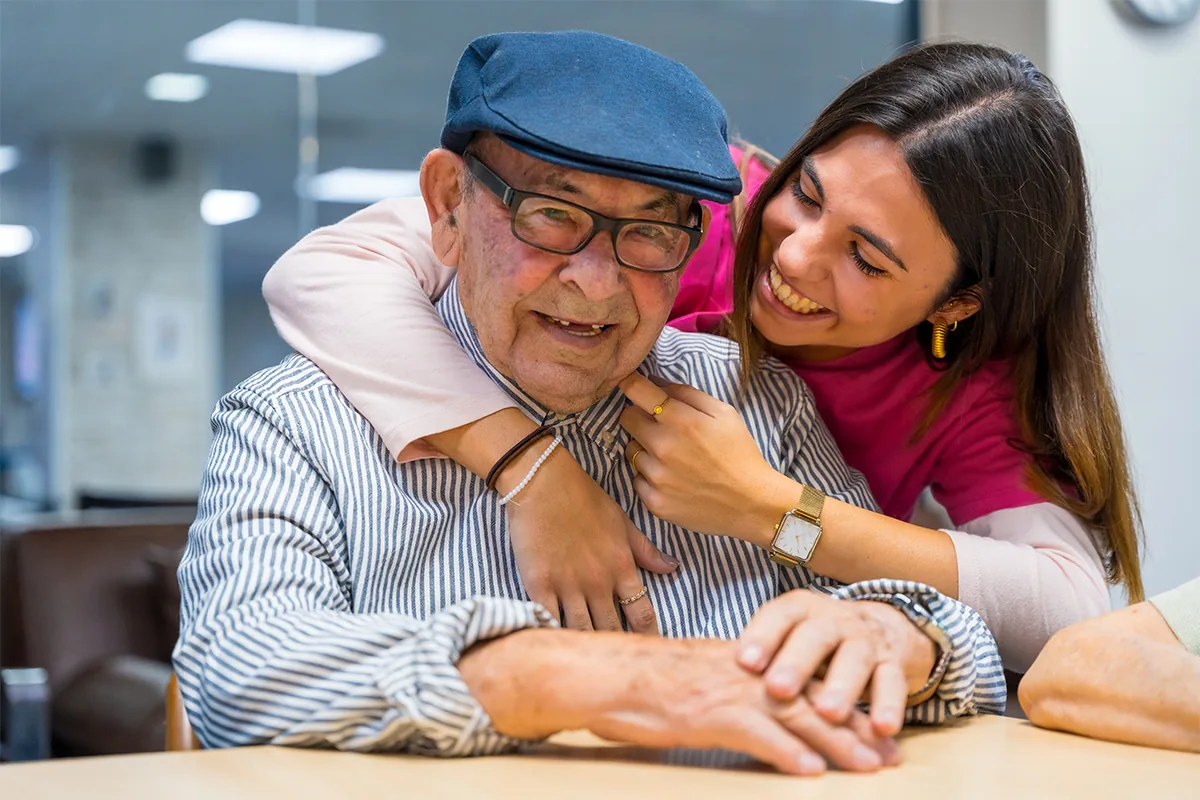
Built around warmth, familiarity and everyday reassurance for both sides of the conversation.
08:00
Good morning John, it is Tuesday. Tea is in the kitchen.
Family prompt
Emma
Your daughter is visiting at 3pm
Carer notification
Medication reminder not confirmed. Share a gentle follow-up?
Safety layer
Unknown caller detected. Suggesting: “Please speak to my family first.”
Why this exists
Built from what dementia took from my own family.
Dementia has run through both sides of my family, and I have watched first-hand how this progressive disease can slowly reshape everyday life. My nan died five years ago after a long battle with dementia-related illness, including the painful stage where she no longer recognised parts of her own family. My father also died last year after battling dementia.
Across both experiences, the same patterns kept appearing. A lost sense of time. Distress caused by a lack of structure. Anxiety around not remembering who was coming to visit, what was happening that day, or even whether lunch was at 1pm. Sometimes it was even simpler than that: needing someone or something to respond at odd hours when sleep had become erratic and the world no longer felt steady.
Setting up Adoptabot is also a personal journey for me while I cope with the loss of my loved ones. Being able to focus my energy on helping other families has given me the strength to turn something deeply negative into a huge positive. With so much negativity around AI, I wanted to put my background in computer science and technology to better use. Adoptabot grew from that decision. The idea is not to replace human care, but to create a calm companion that can bring back structure, familiarity and reassurance when they are needed most.

“Sometimes the most valuable support is simply knowing what day it is, who is coming later, and hearing a calm voice in the middle of the night.”
Why families turn to Adoptabot PALpeople are projected to be living with dementia in the UK by 2040.
Reminder prompts, clocks, medication aids and locator tools already matter.
How it works
Designed to feel familiar, not technical.
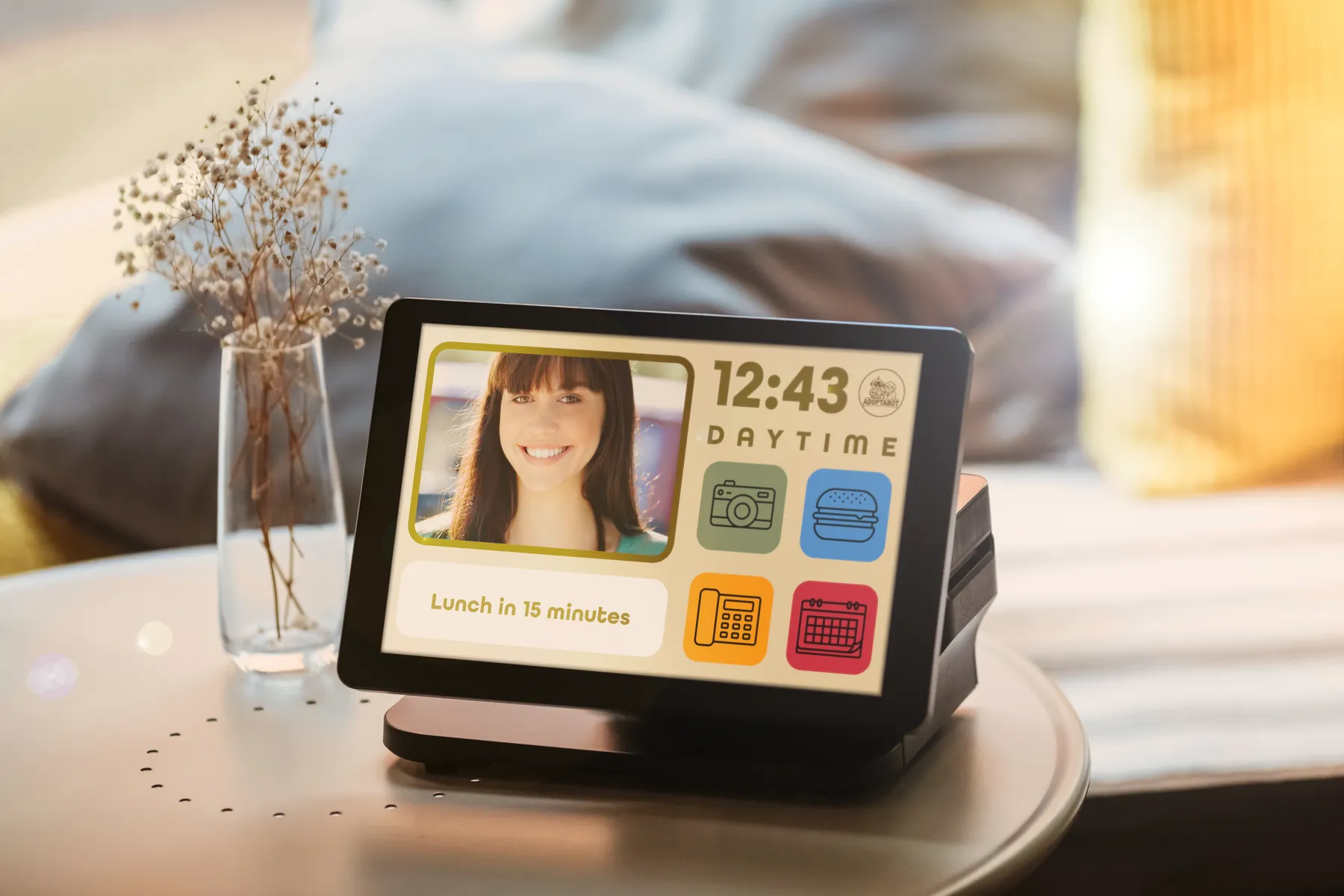
Routine prompts that sound human
Morning, mealtime, medication and leaving-home reminders can be scheduled as warm spoken messages instead of cold alarms.
Family photo reassurance
Shared photos become gentle prompts for names, relationships and upcoming visits, helping familiar faces stay grounded in context.
Quiet oversight for carers
If a routine appears to have been missed, a nominated family member or carer gets a simple nudge instead of monitoring everything all day.
One-button connection
The interface prioritises one-tap calling and video check-ins so reassurance is always easier than navigating menus.
Scam warning mode
When an unknown caller or suspicious message appears, PAL can switch to a safer script and prompt the person to pause before responding.
Early-stage dementia focus
PAL is designed to support independence for longer, while keeping carers informed before confusion turns into crisis.
Who it is for
Starting with people who need clarity at home.
Families
Support a parent or partner with routines, recognition prompts and safer calls.
Home carers
Reduce repeated prompting and get visibility on what has or has not happened.
Care providers
Offer a softer at-home support layer between visits and welfare checks.
Get in touch
Start a conversation about support at home.
Use this section to get in touch about family support, care-provider partnerships, or introducing Adoptabot PAL into daily routines at home.